Gargano in winter: what to see and do off-season - Hotel Paglianza
Gargano in winter is a place of waves breaking against empty beaches, the scent of wood smoke drifting through village streets and forests transformed by the colours of a rainy day.
Forget beach clubs and long afternoons spent soaking up the sun: from December to February, this corner of Puglia offers experiences that have little in common with a traditional summer holiday.
A walk along the seafront, a visit to a sanctuary carved into the rock or lunch at a countryside trattoria can easily become the highlight of an entire day. And sometimes, nothing more is needed. If you are considering a winter weekend in Gargano, here are some suggestions to help you choose where to go, understand what makes this season special and plan your trip without unexpected surprises.
What is Gargano like in winter?
One of the first things you will notice when arriving on the coast is how different everything feels compared to summer. Life in Peschici and Vieste continues long after the tourists have left, but it follows the routines of the people who live here throughout the year. Beaches become wide, open stretches of sand, outdoor café tables give way to cosy indoor spaces, and village squares are once again gathering places for local residents.
This is precisely what makes the experience interesting for travellers who want to discover more than Gargano’s seaside attractions. It does not mean that everything remains open or that you can enjoy the same activities available in August. Quite the opposite: visiting Gargano off-season requires a different approach to planning your days, with fewer scheduled activities, a little more preparation and the flexibility to adjust your plans according to the weather.
The climate also changes considerably from one destination to another. Along the coast, the influence of the sea generally keeps temperatures milder than in inland areas, although strong winds can make the air feel much colder. Monte Sant’Angelo and the higher elevations of Foresta Umbra, on the other hand, experience more severe winter conditions, with possible frost and occasional snowfall when the weather allows. If you are planning to explore both the coast and the interior in a single day, remember to take these differences into account when choosing what to wear.
Charming villages to explore without the crowds
To discover what to see in Gargano in winter, its historic villages are an excellent place to start. Without the constant movement of the summer months, details that might otherwise go unnoticed begin to stand out: a beautifully carved stone doorway, a small church, houses built closely together or a panoramic viewpoint that suddenly appears between two narrow streets.
Peschici in winter: whitewashed streets overlooking the Adriatic
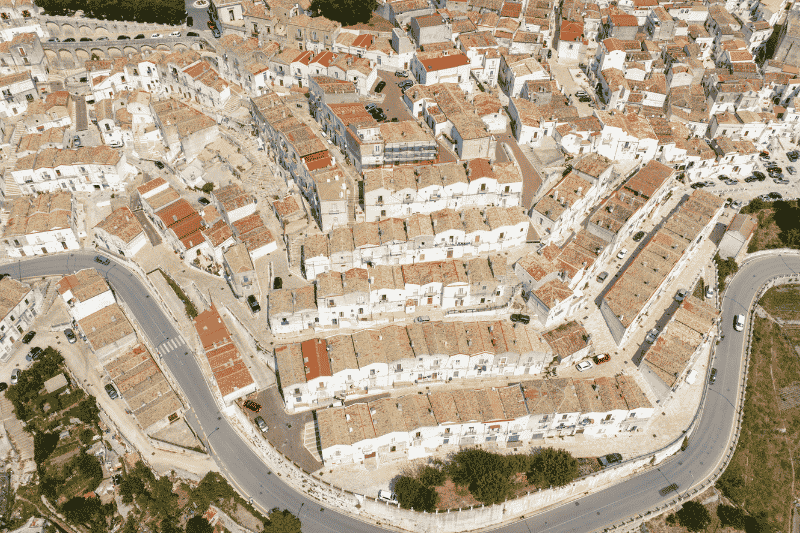
Peschici in winter is worth visiting for its spectacular location alone. The old town stands on a rocky promontory overlooking the Adriatic Sea and preserves its distinctive network of staircases, narrow passageways and whitewashed houses. Wandering through its streets leads to several panoramic viewpoints, offering beautiful views of the coastline and the surrounding landscape.
One of the details worth appreciating at this time of year is the light. On clear days, particularly around midday, the white buildings contrast beautifully with the changing shades of the Adriatic, while the shadows cast along the narrow streets create striking patterns across the façades. There is no need to follow a strict itinerary: start in the historic centre, make your way towards the castle and simply explore whichever streets catch your attention. Before making lunch plans, however, check which restaurants are open, as many businesses operate mainly during the tourist season.
Vieste in winter: Pizzomunno and the old town
Anyone who has visited Vieste in August will probably remember the lively promenade and crowded beaches. Returning during the colder months reveals a completely different side of the town. Pizzomunno, the impressive limestone monolith rising from Castello Beach, dominates a landscape where the sea, sand and sky become the main attractions.
From the seafront, continue towards the historic centre, where narrow streets, stone arches and traditional houses extend across the promontory. Among the most interesting stops are the Cathedral of Santa Maria Assunta and Punta San Francesco, one of the most recognisable corners of the old town. This is the kind of visit best enjoyed without rushing, combining leisurely walks with stops to admire the coastline.
Vico del Gargano: the understated charm of the countryside
Leaving the coast behind and travelling towards Vico del Gargano, the atmosphere changes noticeably. The village preserves its medieval layout, with stone houses, archways and small passageways that reveal traces of its long history. The castle, the romantic Vicolo del Bacio, or Alley of the Kiss, and the historic churches are among its most distinctive attractions.
It is also worth paying attention to the countryside surrounding the village. Citrus groves and olive trees reveal how deeply agricultural traditions remain connected to the area’s identity. If you have time for another stop, consider visiting Ischitella or Carpino, planning your journey according to the distances and road conditions.
For more information about the individual villages and other places worth exploring, take a look at our complete guide to Gargano.
The winter sea and scenic coastal walks
An empty beach in January can be just as captivating as it is in the height of summer. You simply need to choose the right day. The sea in Gargano during winter alternates between long periods of calm and much rougher conditions, when strong winds lift the waves and clouds gather across the sky. This changing character makes every coastal walk feel different.
In Vieste, Castello Beach is one of the most accessible places for a walk near the water, with the impressive Pizzomunno providing a remarkable backdrop. In Peschici, you might prefer to admire the landscape from above, making your way to the viewpoints scattered around the historic centre. These two experiences offer very different perspectives: one brings you close to the beach, while the other opens up sweeping views across the village and coastline.
The coastal road between Peschici and Vieste is another rewarding route for anyone who loves scenic landscapes. Along the way, rocky headlands, secluded bays and stretches of Mediterranean vegetation create an ever-changing panorama. On clear days, allow time for a few stops wherever parking is permitted, rather than rushing towards your next destination. The hours around sunset can be especially beautiful, with soft light creating delicate shades across the rocks and the surface of the sea.
It is important to remember, however, that not all beach access points remain available during winter, and some areas may be exposed to rough seas or falling rocks from coastal cliffs. Choose public, accessible and safe walking routes, avoiding exposed cliffs and isolated stretches of coastline when weather conditions are unfavourable.
Nature and Foresta Umbra
There is much more to Gargano than its coastline. Travel inland and you will discover forests, agricultural landscapes and natural environments with very different characteristics. During winter, some of these places become especially interesting, particularly for travellers who enjoy nature photography and peaceful outdoor experiences.
Foresta Umbra is undoubtedly one of the most remarkable natural areas in the interior. Here, beech trees, oaks, maples and other species form an extensive woodland of great ecological value. Once the deciduous trees have shed their leaves, the structure of the forest becomes more visible: trunks, branches and carpets of fallen leaves create scenery unlike anything you would encounter during the warmer months.
Do not necessarily expect a snow-covered landscape. Snowfall in Foresta Umbra is possible, but snow is not a permanent feature of the winter season. You are more likely to encounter damp conditions, fog or paths made muddy by recent rainfall. These conditions call for extra care, particularly if you are planning a hike.
Before setting out, check road accessibility, trail conditions and any temporary restrictions. In the event of ice, snow or severe weather, it is safer to postpone your excursion and choose an alternative activity. You can learn more about this fascinating natural environment in our guide to Foresta Umbra.
Another interesting nature experience can be found around the lagoons of Lesina and Varano, in the northern part of Gargano. During winter, these wetlands provide opportunities for observing waterbirds, including species that spend the colder months in the area. For birdwatching enthusiasts, a pair of binoculars and an accessible observation point may be all that is needed to spend a rewarding few hours surrounded by nature.
Culture and spirituality
Not every trip depends on sunny weather. Some of Gargano’s most significant attractions invite visitors inside historic churches, sanctuaries and remarkable buildings, offering experiences that can be particularly rewarding during the colder months.
In Monte Sant’Angelo, you will find the Sanctuary of Saint Michael the Archangel, one of Europe’s most important pilgrimage destinations dedicated to the Archangel Michael. What makes this site especially remarkable is the presence of a natural cave associated with centuries of religious devotion and pilgrimage. The sanctuary is part of the UNESCO World Heritage site dedicated to the Longobards in Italy and preserves an extraordinary historical and spiritual legacy.
Your visit should not end at the sanctuary. A walk through the Junno district, with its whitewashed houses and intimate network of narrow streets, reveals another side of the town’s identity. Continue towards the castle and the main panoramic viewpoints if weather conditions permit. To plan your visit, explore our article on Monte Sant’Angelo: history, spirituality and nature.
Another important destination is San Giovanni Rotondo, internationally known for its connection with Padre Pio. The Sanctuary of Santa Maria delle Grazie and the Church of Saint Pio of Pietrelcina, designed by architect Renzo Piano, welcome pilgrims and visitors throughout the year. Even travellers who are not visiting for religious reasons may find these places fascinating from an architectural and cultural perspective.
For all these destinations, it is advisable to check opening hours and visiting arrangements in advance, particularly if you plan to travel on weekdays.
Seasonal food and traditional cuisine
A day spent exploring scenic roads and inland villages is even better when it ends with a comforting meal. Gargano’s culinary traditions remain closely connected to rural life and pastoral heritage, and winter brings renewed appreciation for pulses, seasonal vegetables, traditional bread and local cheeses.
Among the dishes worth discovering is pancotto, a humble recipe originally created to make use of stale bread, enriched with whatever ingredients were available at home. Recipes vary from one family to another and may include vegetables and other local produce. Another traditional combination is fava bean purée with chicory, a simple but flavourful dish that remains popular throughout Puglia.
Pane di Monte Sant’Angelo, known for its substantial crust and soft interior, is particularly enjoyable with good extra virgin olive oil and local cheeses. Another speciality worth tasting is caciocavallo podolico, a traditional cheese closely associated with the livestock farming heritage of the Gargano promontory.
If you would like to try these specialities, look for a trattoria serving regional cuisine and ask about the dishes available that day. During winter, some restaurants in coastal tourist destinations close for the season, while inland towns may offer establishments that remain popular with local residents. Calling ahead is always a good idea.
Practical tips for a winter weekend in Gargano
The secret to planning a successful winter weekend in Gargano is resisting the temptation to fill every hour with activities. Distances may appear short on a map, but travelling between the coast and the interior often involves winding roads, so realistic journey times are essential.
For a two-day visit, you could spend the first day exploring Peschici and Vieste, combining walks through their historic centres with a few panoramic stops along the coast. On the following day, travel to Monte Sant’Angelo and take time to visit the sanctuary and surrounding village. If you prefer spending time outdoors, Foresta Umbra could be an alternative, provided that weather and trail conditions allow for a safe excursion.
When it comes to transport, travelling by car generally offers the greatest flexibility, particularly if you want to visit several places in one day. Public transport connections are available, but routes and frequencies may differ from those operating during summer. Always check the latest timetables and avoid relying on seasonal tourist services.
Pack comfortable waterproof footwear, a windproof jacket, layers of clothing and warmer garments for inland excursions. Check the weather forecast before setting out on a nature walk, and remember that winter daylight hours are much shorter than in summer. For outdoor activities, it is best to start in the morning and avoid travelling through isolated areas after dark.
Finally, spend a few minutes checking opening times. Hotels, museums, restaurants and tourist attractions may close seasonally or operate reduced hours. Having an indoor alternative in mind will make it much easier to adjust your plans if rain or strong winds interrupt your original itinerary.
Frequently asked questions about Gargano in winter
Is Gargano worth visiting in winter?
Yes, especially if you enjoy peaceful historic villages, coastal scenery, cultural experiences and traditional local food. Visiting Gargano in winter allows you to discover a side of the region that is less connected with beach tourism. However, you should plan your trip with changing weather conditions and the reduced availability of certain tourist services in mind.
What is the weather like in Gargano in winter?
Temperatures are generally milder along the coast, while inland areas and higher elevations experience colder conditions. Peschici and Vieste can enjoy sunny days even during winter, although rain and strong winds are also possible. Monte Sant’Angelo and Foresta Umbra may experience frost and occasional snowfall.
What stays open in Gargano during the off-season?
Many places of worship and some museums can be visited throughout the year, although opening times and access arrangements may vary. Towns also have shops and businesses serving local residents. However, beach clubs, boat excursions and many seasonal tourism facilities may suspend their activities during the winter months. Always confirm opening times directly with the relevant operators before travelling.
Between a walk by the sea and a visit to the countryside, Gargano has plenty to offer travellers who choose to discover it beyond summer. There is no need to visit every village or attraction. Sometimes, leaving a little room in your schedule is exactly what allows you to discover the most memorable places.
If you would like to learn more about the destinations worth visiting and find inspiration for your next itinerary, explore the Gargano territory page on the Hotel Paglianza website. From historic villages and natural landscapes to beautiful coastal views, you will find plenty of ideas for future excursions and for planning your next stay during the hotel’s opening season.